

PegaWorld ’26 has just wrapped up and, as usual, it was packed with exciting keynotes, product announcements, and a glimpse into where Pega is heading next.
In this article, I will try to summarize some of the highlights that stood out to me from PegaWorld ’26.
Let’s start with the biggest one.
1. Zero Token Cost
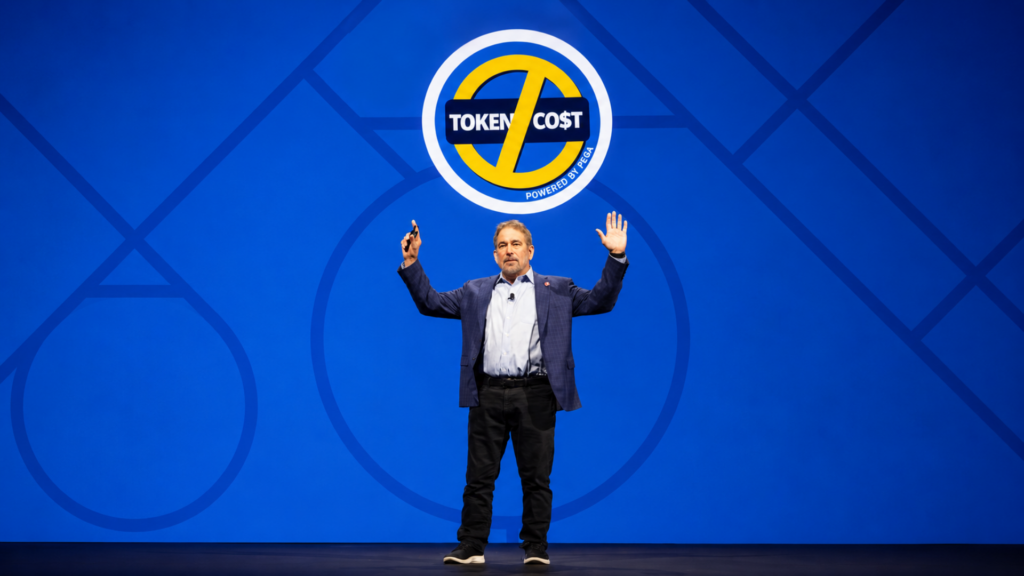
This announcement came from none other than Alan Trefler.
And honestly, it is a huge statement.
Remember last year’s PegaWorld?
Pega introduced the concept of Predictable AI, built around Pega’s own AI capabilities and governance guardrails. At the time, it felt like a different approach compared to many AI providers.
This year, Pega took the conversation one step further.
The focus is not on tokens.
The focus is on outcomes.
We don’t charge clients based on how many tokens they use, but by the meaningful work they accomplish
Alan Trefler, The CEO, Pegasystems
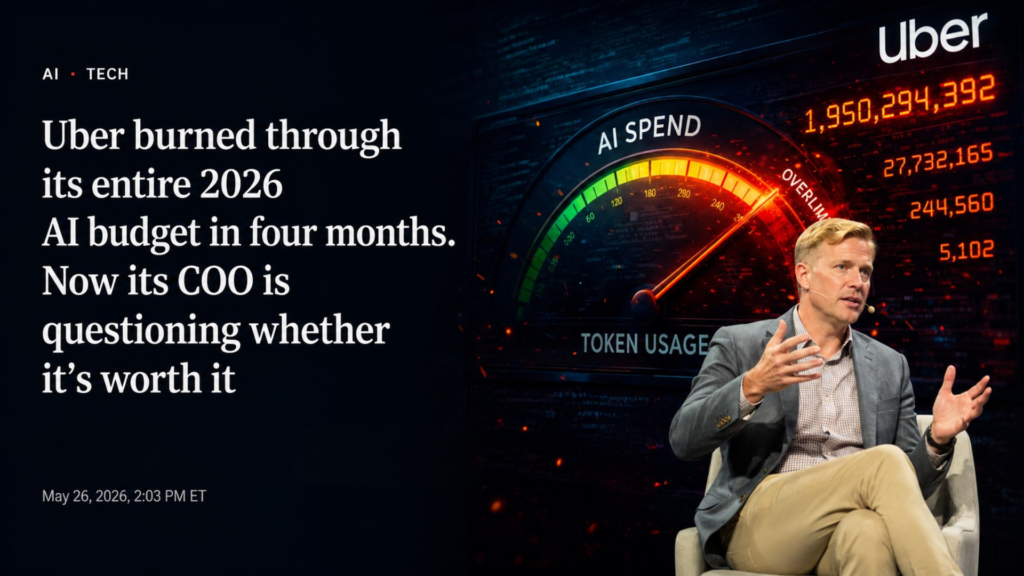
Over the past few weeks, the internet has been flooded with discussions around AI token consumption. Stories of organizations exhausting their annual AI budgets within a quarter, enterprises restricting copilot usage, and teams spending significant effort on token optimization have become increasingly common.
If you look at Pega Blueprint today, Pega Blueprint is publicly available. Anyone can build applications. And there is no token cost attached to it. The focus is on getting the outcome right – designing the application, not counting tokens.
The same can be said about the Pega Community Edition. Pega Community Edition already runs with AI included, with thousands of instances active across the community for learning, experimentation, and innovation. Token consumption was never the discussion. The goal has always been to empower the community
Now Pega is extending that philosophy to enterprise AI.
The message is clear – customers should focus on achieving outcomes, while Pega focuses on delivering predictable costs around those outcomes.
Check more details about – DON’T PAY FOR TOKENS HERE – Pega link
That is a statement that could genuinely shift how organisations evaluate AI providers. Pega has always been outcome-focused, and this positions that belief directly against the per-token pricing model that most AI vendors are running.
This represents a significant shift towards outcome-based licensing, where value is measured by completed business cases rather than seats, users, or AI token consumption.
That is what makes the Zero Token Cost announcement so interesting.
Will it change the direction of the broader AI industry? Time will tell, but it is exactly the kind of differentiator Pega backers and partners would have been hoping for.
For those interested, Pega has also published an AI Token Calculator where customers can compare costs themselves. – AI Token Usage & ROI Calculator
2. The Launch of Infinity Studio
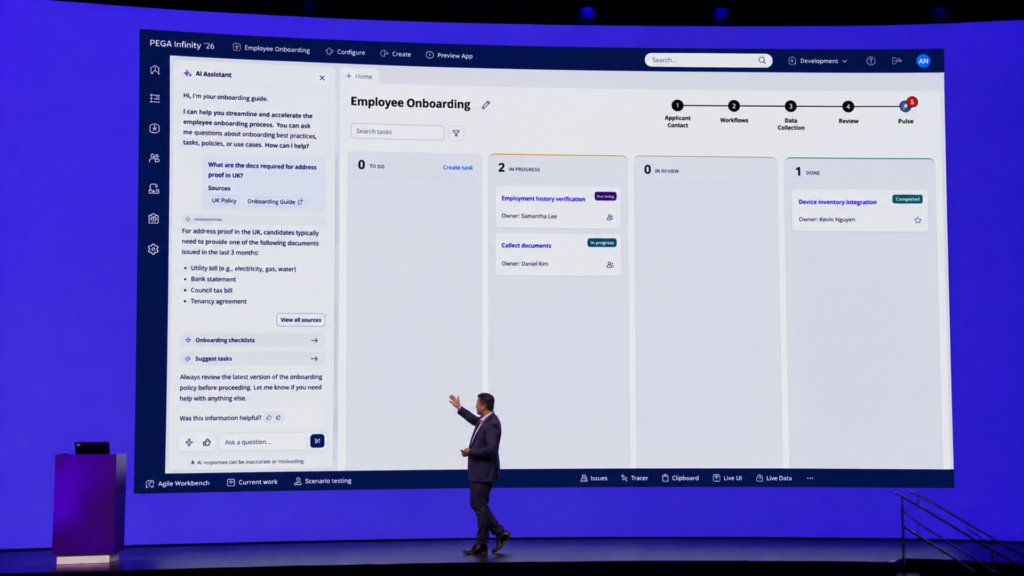
One of the most exciting product announcements was the introduction of Infinity Studio with Pega Infinity ’26.
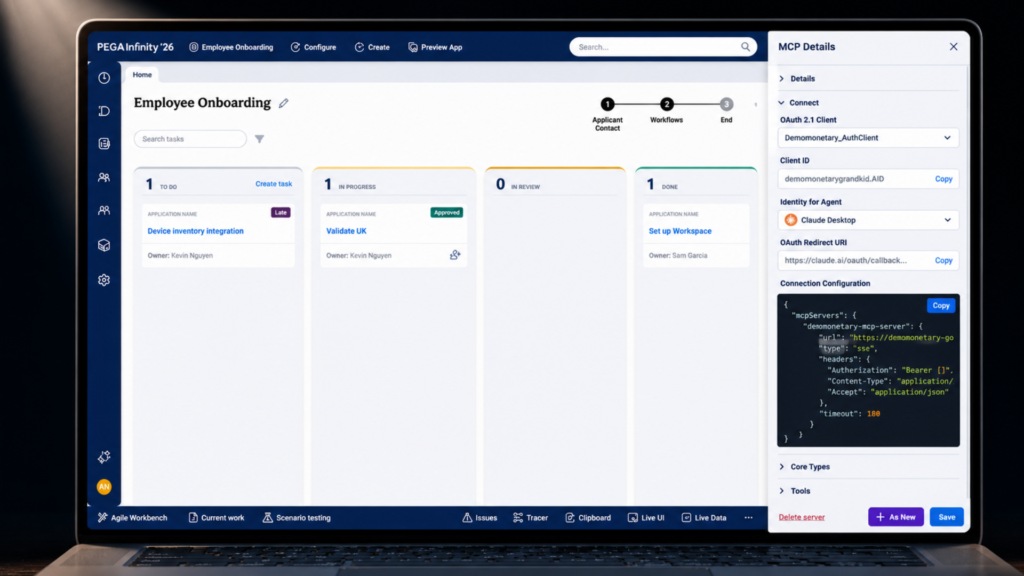
For years, developers have debated which studio should be used for building applications. App Studio became the preferred environment for low-code development, while Dev Studio remained the place for deeper technical implementation.
From an insider perspective within the Pega Product engineering community, the word is that App Studio is heading towards deprecation – and possibly Dev Studio too.
I want to be clear, we need to wait for more clarity on the timeline and specifics. But the direction looks increasingly clear.
Infinity Studio is taking center stage.
The vision is to provide a unified experience where application design, development, AI assistance, Blueprint integration, and enterprise orchestration capabilities come together in a single environment.
Kerim Akgonul, demonstrated an early glimpse of Infinity Studio and how AI-assisted application development is becoming a first-class experience within the platform.
This was not the only exciting announcement from Infinity ’26.
The event showcased multiple innovations around MCP orchestration, Blueprint-delivered applications, AI assistants, agentic experiences, and enterprise AI governance.
Infinity Studio appears to be the foundation that brings many of these capabilities together.
3. Customer Engagement Studio
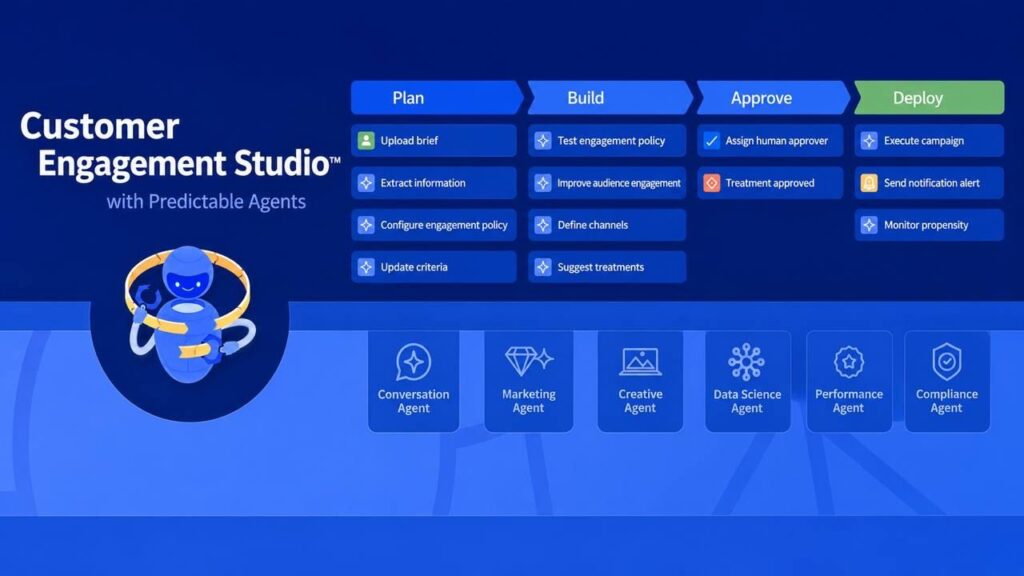
Another interesting announcement came during the final day keynote when Don Schuerman introduced Customer Engagement Studio.
This studio is more focused on the Customer Decision Hub (CDH) space and the future of agentic marketing.
The vision is quite interesting.
Customer Engagement Studio aims to bring together both Pega agents and third-party AI agents into a single workspace where marketers can plan, execute, monitor, and optimize customer engagement activities.
Instead of simply configuring campaigns, marketers will be able to collaborate with AI-powered agents that assist throughout the customer engagement lifecycle.
From campaign planning to execution and optimization, the experience appears to be moving toward a more agent-driven operating model.
For professionals working in the CDH space, this is certainly an area worth watching closely over the next few releases.
4. Process Fabric Evolves into Agentic Process Fabric
Another major highlight was the evolution of Process Fabric into Agentic Process Fabric.
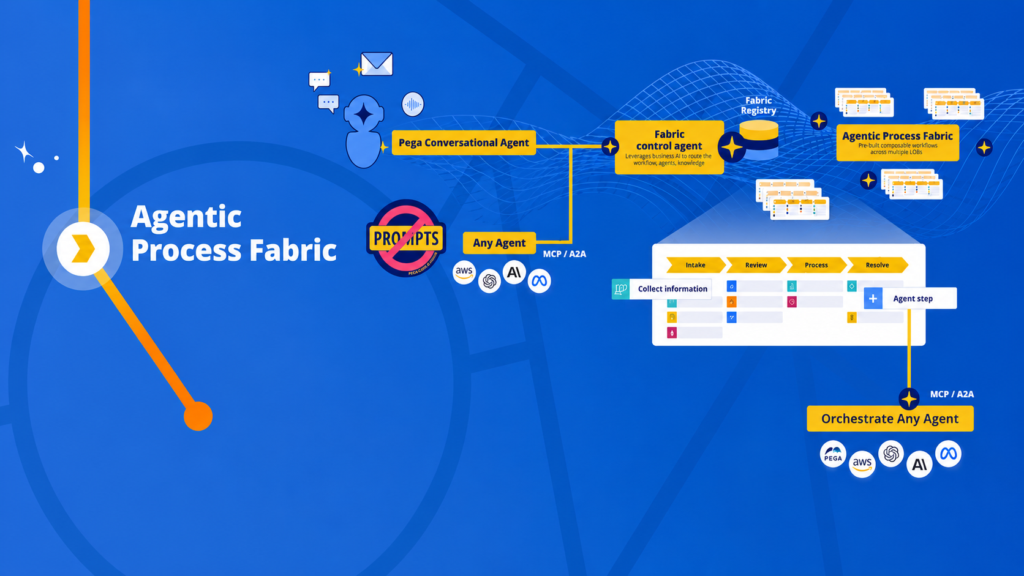
If there is one trend that is becoming obvious across enterprises, it is the growing number of AI agents, copilots, MCP servers, and specialized AI services being introduced across the organization.
The challenge is no longer building agents.
The challenge is orchestrating them.
Pega’s answer is Agentic Process Fabric.
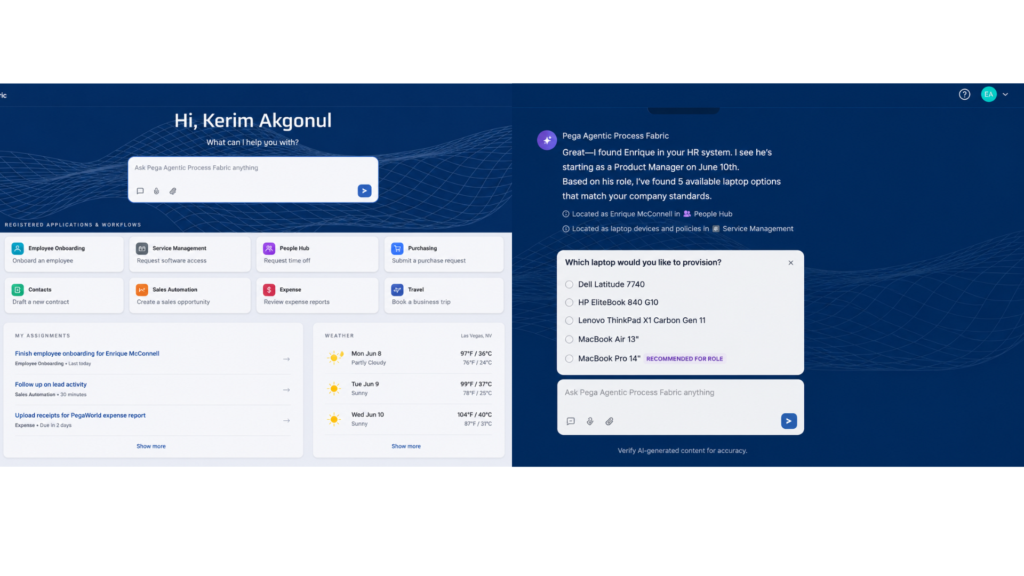
During the keynote, Kerim Akgonul demonstrated an agentic self-service portal capable of connecting with multiple MCP servers and enterprise AI agents while coordinating them toward a desired business outcome.
This is where things become interesting.
Rather than positioning itself as another AI platform, Pega is positioning itself as the enterprise orchestration layer capable of governing and controlling a fragmented AI ecosystem.
Different business units may adopt different AI agents. Different vendors may provide different capabilities. Different teams may expose MCP servers for specialized functions.
Agentic Process Fabric aims to bring all of these together under a single orchestration and governance model.
Personally, I believe Blueprint and Agentic Process Fabric will continue to receive significant attention over the coming years.
The direction from Pega appears very clear – becoming the enterprise orchestration platform for the age of AI agents.
Final Thoughts
PegaWorld ’26 felt less about individual features and more about platform direction.
Four themes consistently stood out:
- Predictable AI outcomes over token consumption.
- AI-first application development through Infinity Studio.
- Agentic marketing through Customer Engagement Studio.
- Enterprise-wide orchestration through Agentic Process Fabric.
There were many other exciting announcements throughout the event, but these were the highlights that stood out most to me.
Can’t wait to get hands-on with the official Pega Infinity ’26 release and see how these innovations translate into real-world implementations 🤩