

With the recent Pega Infinity releases, we have seen some significant changes in the way Pega applications are deployed.
With the deprecation of VM-based deployments and the subsequent removal of support in Pega Infinity ’25, containerization is no longer a choice for customers who want to stay current with the latest Pega versions.
We have also seen other infrastructure-level changes, including the externalization of services such as Kafka, Elasticsearch and Cassandra.
As Pega architects, it is important to follow the Pega Platform Support Guide continuously to stay updated on the supported infrastructure components: databases, application servers, externalized services and their dependencies.
With these changes, coupled with the increasing adoption of cloud technologies across enterprises, I expect to see more cloud migration and infrastructure modernization projects in the Pega landscape in the coming years, or at the very least, a move towards containerized deployments.
But there is more to it than just containerization!
Containers Are Settled. Your Deployment Model Is Not.
We know that containerized Pega deployments are the way forward.
How do we orchestrate these container deployments? Kubernetes is the answer.
But where do we host these Kubernetes clusters? Who manages them? And who takes responsibility for the underlying Pega infrastructure and its operations?
This is where organizations have different deployment models to consider.
Three Ways to Run Pega on Kubernetes
1. On-premise infrastructure
You can run Kubernetes clusters within your own data centers, with your infrastructure teams taking responsibility for managing the clusters, networking, storage, security, upgrades and other operational activities.
2. Client-managed cloud
You can deploy your Pega applications on cloud platforms such as AWS, Microsoft Azure or Google Cloud.
Of course, these providers offer several managed infrastructure services, including managed Kubernetes. But your organization still retains a fair share of responsibility for the overall Pega deployment, configuration, maintenance and operations.
3. Pega Cloud
Or you can choose to host your Pega applications on Pega Cloud, where much of the infrastructure and platform operational responsibility is handled by Pega’s own cloud engineering teams.
This does not mean that customers have no responsibilities. Application development, business configuration, integrations and several other activities remain with the customer.
Pega has a well-defined shared responsibility model that explains these boundaries. You can explore it here: Pega Cloud Responsibility Model
Why Pega Cloud Deserves a Seat at the Table
I strongly believe organizations should seriously evaluate Pega Cloud as one of their deployment options before finalizing their cloud migration strategy.
Am I saying that every organization should move to Pega Cloud?
Absolutely not!
There can be several valid reasons for choosing client-managed infrastructure, including existing enterprise cloud strategies, compliance requirements, integration dependencies, commercial considerations and the level of infrastructure control required.
These are enterprise architecture decisions, and there is no single answer that fits every organization.
But having worked with both deployment models, I do believe Pega Cloud deserves a serious evaluation.
A few months ago, I wrote another article covering 5 reasons to host your applications on Pega Cloud.
I don’t want to repeat those same points here.
However, with Pega Infinity ’26 and the announcements from PegaWorld 2026, I believe that article deserves an upgrade!
So consider the following as reasons 6, 7 and 8. 😉
For the first five reasons, you can always refer to my earlier blog.
Reason 6: Saying Goodbye to the AI Token Tax
One of the most interesting announcements from PegaWorld 2026 was about eliminating the AI token tax.
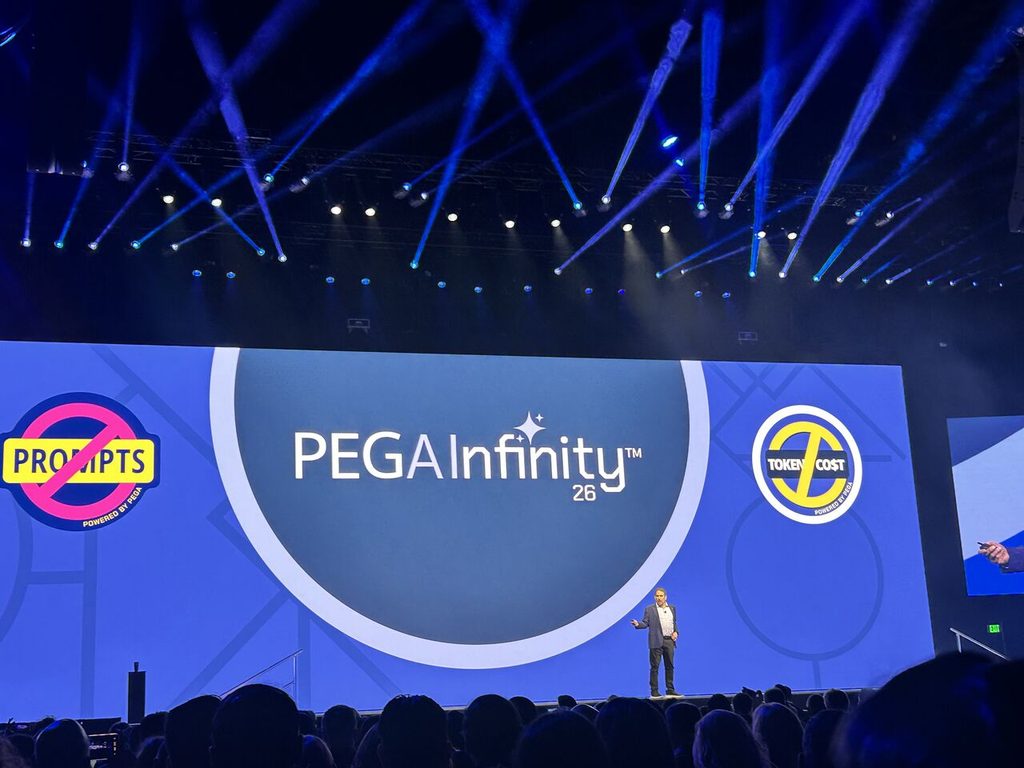
We all know that GenAI adoption is growing rapidly. But when enterprises start moving from experimentation to production, one concern becomes increasingly important.
How much is all this AI usage going to cost us?
Traditionally, GenAI consumption is measured in tokens, and depending on the model, the usage volume and the complexity of the requests, the costs can become difficult to predict.
Pega announced a different approach with Infinity ’26, shifting the focus towards business outcomes rather than charging customers for every AI token consumed.
I find this direction particularly interesting.
Organizations invest in enterprise platforms to deliver business outcomes, not to calculate how many tokens an AI agent consumed to complete a task.
Personally, I believe we may see more enterprise platforms moving towards outcome-oriented AI pricing in the coming years.
Now, what does this mean for organizations evaluating Pega Cloud?
If GenAI adoption is part of your modernization roadmap, this is definitely something worth discussing with your Pega account executives.
Understand how the latest AI pricing model applies to your subscription, which capabilities are included, and whether there are any additional commercial considerations.
I would not assume that every GenAI capability is automatically free or that all existing contracts follow the same model.
But combining your cloud modernization strategy with your future GenAI adoption plans could make the overall proposition much more interesting.
Pega has published the official announcement explaining this approach in detail, along with an AI Token Cost Calculator to estimate the difference for your own workloads.
Reason 7: Pega Cloud Comes Closer to Home
Another interesting development is the continued expansion of Pega Cloud’s global infrastructure.

One of the reasons organizations sometimes prefer client-managed cloud deployments is their specific data residency, regulatory or industry compliance requirements.
For example, consider an organization operating in Saudi Arabia.
It may be required to host certain data within the Kingdom, which can influence its choice of cloud deployment model.
Previously, the availability of Pega Cloud in a particular region could have been a limiting factor.
But things are changing.
Through Pega’s partnership with Google Cloud, Pega Cloud is now available across a broader range of deployment regions.
And interestingly, Pega Cloud is also available on Google Cloud in Saudi Arabia!
This is a meaningful development for organizations with local data residency requirements.
Pega has also been expanding its offerings for customers with government, sovereignty and other regulatory requirements.
Of course, the availability of a regional data center does not automatically mean every compliance requirement is satisfied.
Organizations must still evaluate the applicable certifications, data processing arrangements, support model, contractual requirements and other regulatory obligations.
But the important point is that the available options are expanding.
If your organization evaluated Pega Cloud a few years ago and ruled it out because of regional availability or compliance considerations, perhaps it is worth evaluating it again.
You can refer to the latest supported deployment regions here: Pega Cloud Deployment Regions
Reason 8: Stay Current Without Carrying the Infrastructure
This is another point I strongly believe in.
During one of Pega’s recent discussions, Alan Trefler emphasized the importance of staying current and taking advantage of the latest capabilities the platform offers.

I think this is particularly relevant for organizations that have been using Pega for several years.
We have all seen enterprise applications running on older Pega versions, sometimes because of business priorities, sometimes because of technical dependencies, and sometimes simply because upgrading the infrastructure itself requires considerable planning and effort.
With every major release, Pega continues to introduce new capabilities.
Look at the recent developments around Constellation, Blueprint, GenAI, AI agents and the new capabilities introduced with Infinity ’26.
But how much value are organizations really getting from these innovations if they remain several versions behind?
Of course, upgrading Pega is not just an infrastructure activity.
There are application compatibility checks, regression testing, integration validations, customizations and business readiness activities.
These responsibilities do not disappear simply because you are running on Pega Cloud.
However, with Pega Cloud, a significant portion of the underlying infrastructure operations and platform maintenance is handled by Pega’s cloud engineering teams.
This can reduce the operational burden on internal teams and allow them to focus more on application modernization and on adopting newer platform capabilities.
And that is where I see an important advantage.
Your Pega team should spend more time delivering business capabilities than maintaining the infrastructure needed to run them.
Again, this does not mean upgrades become effortless on Pega Cloud. But having the platform vendor manage a significant portion of the infrastructure can certainly help organizations plan their modernization journey more effectively.
My Personal Take: Think About the Long Road Ahead
Cloud migration is not a small architectural decision.
You are making a decision that can influence your organization’s infrastructure strategy, operational model, costs, compliance and modernization roadmap for several years.
So don’t evaluate it based only on the immediate migration effort.
Think about the long road ahead.
Who will maintain the infrastructure? Who will manage platform upgrades? How will your teams adopt future Pega capabilities? And how much engineering effort do you want to keep investing in platform operations?
There are many factors to consider, and the right answer will always depend on your organization’s requirements.
Having personally worked with both client-managed Pega environments and Pega Cloud, including leading a Pega Center of Excellence for a Pega Cloud customer, I have seen the advantages and challenges of both deployment models.
And from my experience, I can certainly vouch for the support and collaboration I have received from Pega’s cloud engineering teams!
That doesn’t mean every experience will be identical, or that Pega Cloud is the best fit for every customer.
But if your organization is already planning to migrate its Pega applications to the cloud, I would strongly encourage you to include Pega Cloud in your evaluation.
After all, if you are already moving Pega to the cloud, why not consider Pega Cloud?