


Declare On Change looks similar to a Declare Expression, but it does more than calculate a value. It watches a set of properties and, when they change, either runs an activity or triggers a policy override on the case.
What Declare On Change Actually Does
Like other declarative rules, Declare On Change runs on forward chaining. You configure which properties it watches, and it fires automatically whenever one of them changes.
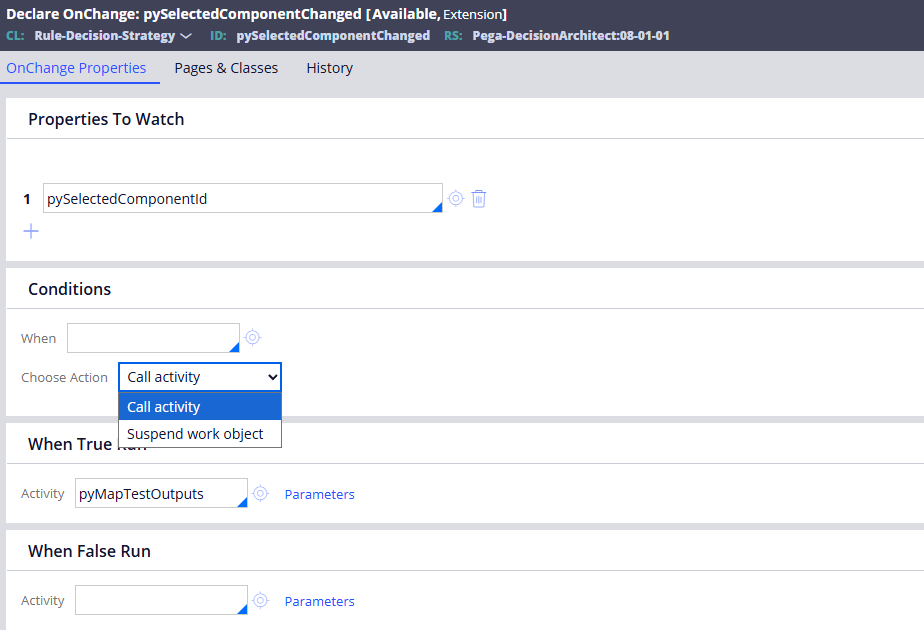
Once triggered, you choose one of two actions. You can run an activity of type onChange for more complex processing, such as adding a row to a grid. Or you can override the policy and suspend the work object entirely.
The Policy Override Use Case
A common business need is suspending a case when fraud is suspected. If a reviewer flags a case, it should stop moving until someone approves or denies it.
Watch the Full Walkthrough
The video shows the full configuration in Dev Studio, including the tracer output for the forward chaining and suspend flow.
Declare On Change is worth knowing well if your application needs conditional suspension or automated grid updates based on property changes, not just simple expression-driven calculations.