

There is one learning tip I keep coming back to, especially when I talk to people who are trying to grow as Pega developers and architects.
Get the foundations before you try to master anything.
This is something I strongly believe in, and it has been core to the content I create through MyKnowAcademy, blogs, or YouTube – start by clarifying the basics first.
I think it becomes even more important as platforms like Pega become more powerful and provide higher levels of abstraction.
A lesson I learned while learning to drive
I might have shared this story in one of my old YouTube videos.
When I started learning to drive, I was genuinely afraid. During the first few days behind the wheel, I was following instructions without really understanding what I was doing.
My elder brother, who was already an experienced driver, shared a few basic YouTube videos with me. They explained simple things: how a car works, what happens when you press the clutch, how the gears work, how your actions from the driver’s seat make the car respond.
Those videos did not teach me how to become a great driver. But they gave me something more important at that stage – a mental model of what I was doing.
Suddenly, when I made a mistake while reverse parking, I could understand why the car reacted that way.
That lesson stayed with me.
Following the same approach with Pega
Pega does a fantastic job of simplifying complex enterprise technologies for application developers. We do not need to build all those capabilities ourselves.
But knowing a little about the technology underneath makes learning the corresponding Pega capability much easier.

Take REST integrations. Understanding HTTP, methods, headers, status codes, JSON and authentication makes it much easier to understand what you are configuring when you build integrations in Pega.
The same happened when Queue Processors and stream based processing became important. I spent some time learning the basics of Kafka. Not because I wanted to become a Kafka engineer. I wanted to understand the architectural concepts behind event streaming and distributed processing so that the corresponding Pega capabilities made more sense to me.
The same happened with infrastructure
There was a point when I started participating more deeply in Pega operational and infrastructure discussions. Docker. Containers. Pods. Kubernetes. Elasticsearch.
I could participate in the discussions, but I wanted the terminology itself to become natural to me. So I went back to basics and took some Docker and Kubernetes courses from KodeKloud, and experimented with them outside Pega.
Again, the objective was not to become a Kubernetes administrator. It was to build enough foundation that when these concepts appeared in a Pega architecture discussion, I understood the bigger picture.
That foundation later helped me enormously on the infrastructure and architecture side of Pega.
Took a cybersecurity course when we developed SecOps Studio, our security monitoring product for Pega applications, for the same reason.
Constellation was another example
When I started preparing Constellation training around 2023, I followed the same approach. I already had some basic IDE programming experience, and I learned enough React concepts to understand components, props, state and the general frontend development model.
That made concepts around DX components and SDK based development much easier to relate to.
You do not need to become a React expert to become good at Constellation. Learn enough of the foundation to understand the architecture, then let Pega do what it does best – simplify how we build enterprise applications.
Now we have Generative and Agentic AI
Today, I think we are at exactly the same point with AI.
Pega is rapidly bringing Generative AI and Agentic capabilities into the platform and making them accessible to Pega professionals. That is exciting, because we can start applying sophisticated AI capabilities without everyone needing to become an AI researcher or machine learning engineer.
But having the foundations will make that journey much easier.
If someone talks about tokens, context windows, inference, embeddings, RAG, grounding, tool calling, MCP or agents, try to understand what those terms actually mean.
Grab an AI foundations course. Experiment with an LLM outside Pega. Make a few API calls. Understand what goes into a prompt and what comes back. Try a small RAG example. See what an agent actually does.
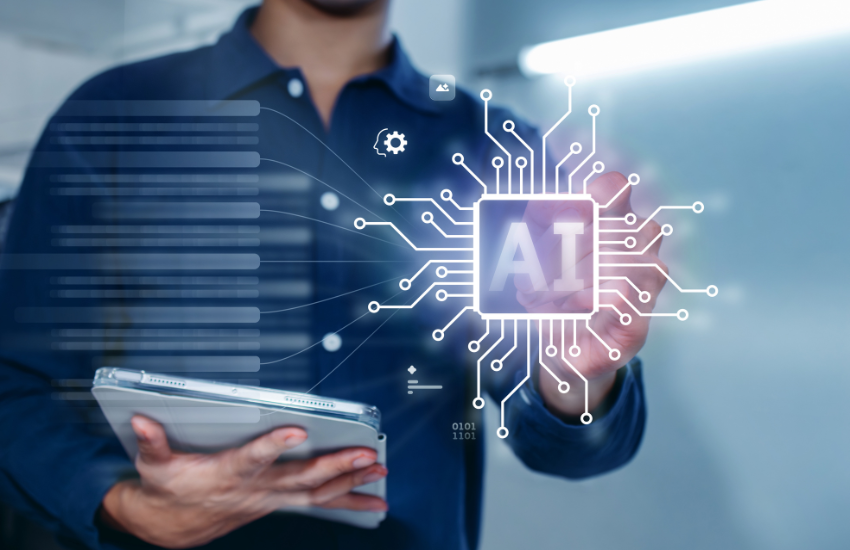
Then come back and look at the Pega capabilities. You will probably appreciate the abstraction even more, because you understand how much complexity the platform is taking care of for you.
Abstraction and foundation should go together
Low-code abstraction is incredibly powerful. Strong foundations make you better at using it.
We do not need every Pega developer to become a Kafka engineer, Kubernetes administrator, React developer or AI researcher. That would defeat the purpose of using a powerful enterprise platform.
But knowing the fundamental concepts underneath helps us ask better questions, troubleshoot better, design better architectures, and understand why certain platform capabilities work the way they do.
This does not stop when you become an architect. My latest learning habit has been going back to architecture itself, reading a couple of books on architecture principles and data oriented architecture to strengthen my broader enterprise architecture thinking.
There is always another foundation we can strengthen.
Forget your experience number for a moment
Maybe you have 5 years of IT experience. Maybe 10. Maybe 15.
If you find yourself struggling with a particular technology or Pega capability, forget that number for a moment. There is no shame in opening a beginner course.
Go back to the foundation. Understand the core concept and connect the dots.
As Pega continues to evolve, the tools and abstractions around us will keep getting better.
Keep your foundations strong, and you will be in a much better position to grow with them.